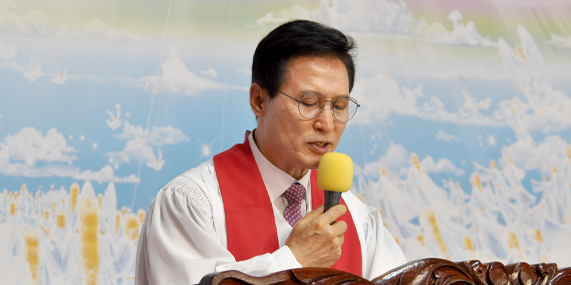
Path of Hope, River of Prosperity 1
Bible passage: Isaiah 43:15-19
“15. I am the LORD, your Holy One, Israel's Creator, your King." 16. This is what the LORD says-- he who made a way through the sea, a path through the mighty waters, 17. who drew out the chariots and horses, the army and reinforcements together, and they lay there, never to rise again, extinguished, snuffed out like a wick: 18. "Forget the former things; do not dwell on the past. 19. See, I am doing a new thing! Now it springs up; do you not perceive it? I am making a way in the desert and streams in the wasteland. "
I once saw an article on the topic, ‘How can students study well?’
In that article, the term ‘metacognition’ was introduced, and these days, when you look at books or YouTube, the term ‘metacognitive learning method, metacognitive ability’ often appears. ‘Metacognition’ is said to be ‘the ability to accurately distinguish between what you know and what you do not know.’ In a word, it refers to the ability to accurately understand oneself.
A broadcasting station production team conducted an experiment regarding ‘metacognition.’ They conducted an experiment by creating two groups: students who were very good at studying and students who ranked first or second in their school were grouped into this group, and the other group was made up of average students. It was an experiment to find out what makes students who are exceptionally good at studying different from ordinary students through various tests such as memory tests and memorization tests.
Analyzing the results of the experiment, surprisingly, there was no significant difference in memory or memorization between the good and poor groups.
Njia ya Tumaini, Mto wa Ufanisi 1
Andiko la Biblia: Isaya 43:15–19
“15. Mimi ni BWANA, Mtakatifu wenu, Muumba wa Israeli, Mfalme wenu. 16. BWANA asema hivi, yeye afanyaye njia baharini na mapito katika maji mengi; 17. aziinuaye magari na farasi, jeshi pamoja na mashujaa; hulala chini wasiinuke tena, wamezimika na kuzimwa kama utambi. 18. Msiyakumbuke mambo ya kwanza, wala msiyatafakari mambo ya kale. 19. Tazama, nafanya jambo jipya; sasa litachipuka, je, hamtalitambua? Nitafanya njia jangwani na mito nyikani.”
Wakati mmoja niliona makala yenye kichwa, “Wanafunzi wanawezaje kusoma vizuri?”
Makala hiyo ilitaja dhana ya “metakognisheni.” Siku hizi, unapotazama vitabu au YouTube, mara nyingi unaona maneno kama “mbinu ya kujifunza ya kimetakognisheni” na “uwezo wa kimetakognisheni.” Metakognisheni hufafanuliwa kuwa uwezo wa kutofautisha kwa usahihi kati ya mambo unayoyajua na usiyoyajua. Kwa kifupi, ni uwezo wa kujielewa kwa usahihi.
Timu ya utayarishaji ya kituo kimoja cha utangazaji ilifanya jaribio kuhusu metakognisheni. Iliunda makundi mawili: kundi la wanafunzi waliofanya vizuri sana, wakiwemo waliokuwa wa kwanza au wa pili shuleni, na kundi la wanafunzi wa kiwango cha wastani. Walifanya majaribio mbalimbali, kama vipimo vya kumbukumbu na kukariri, ili kubaini tofauti kati ya wanafunzi waliofanya vizuri sana na wanafunzi wa kawaida.
Walipochambua matokeo ya jaribio, walishangaa kuona kwamba hakukuwa na tofauti kubwa ya kumbukumbu au uwezo wa kukariri kati ya kundi lililofanya vizuri na lile lililofanya vibaya.
Related SermonsMahubiri Yanayohusiana